
There’s a reason solid wood kitchen cabinets keep coming back into fashion. Not as a trend, but as the “grown-up” choice people land on after living with kitchens that look fine in photos but feel flimsy day to day; doors go out of alignment, edges chip, and finishes fail to age gracefully.
A proper solid wood kitchen’s approach is different. It’s quieter, heavier, more reassuring. You can feel it when you close a door. You can see it in the way the grain catches the light. And if the kitchen is the most used room in the house, it makes sense for it to be built like it.
For Tru English clients, the kitchen is rarely just a kitchen. It’s part of a bigger interior story, whether that’s an expensive country kitchen with warmth and detail, or a sleek, high-end contemporary space that still needs character. The job is to make it feel timeless, not themed.
The phrase solid wood gets used loosely. In practice, good kitchens combine the right materials in the right places. Solid timber doors, frames, and feature elements give you that depth and longevity, while smart construction choices behind the scenes keep things stable through heat, steam, and the reality of cooking.
That’s the point with bespoke joinery. You’re not picking from a standard spec sheet. You’re designing kitchen cabinets and kitchen units around how you live, then building them with finishes that feel right in the hand and still look right ten years from now.
Most materials try to stay perfect. Solid wood, meanwhile, actively improves as it settles in.
With the right finish and careful detailing, you get subtle patina rather than tiredness. Minor marks become part of the story rather than a reason to panic. It’s a kitchen you can actually use, not one you tiptoe around.
That matters for busy households, but also for design-led clients who want the space to feel authentic. Real timber has depth. Natural wood does not look flat under changing light. It picks up warmth in the morning and feels richer at night.
A shaker kitchen works because it’s not trying too hard. Simple lines, good proportions, and an emphasis on craft. But “shaker” can mean a wide range of things, from chunky and rustic to slim, refined and architectural.
If you like shaker styles, treat the details as the design. The width of the frame. The profile of the edge. The way handles sit. Even the spacing between doors. This is where bespoke wins, because you can tune the look to your home rather than forcing the house to suit the kitchen.
A traditional home might suit a softer frame and warm timber tones. A more contemporary build can still use shaker language, just with tighter lines, flatter profiles, and a cleaner palette.
People often search for oak kitchens because oak is familiar and trusted. It can be stunning, especially when you want warmth and texture, but the best wood kitchens start with the wider interior, not just the timber choice.
Ask:
Solid wood kitchen cabinets can be made to feel bold and architectural, or calm and understated. Timber selection and finishing are where that direction is set.
A lot of people love the idea of timber, but worry it will dominate the room. It doesn’t have to.
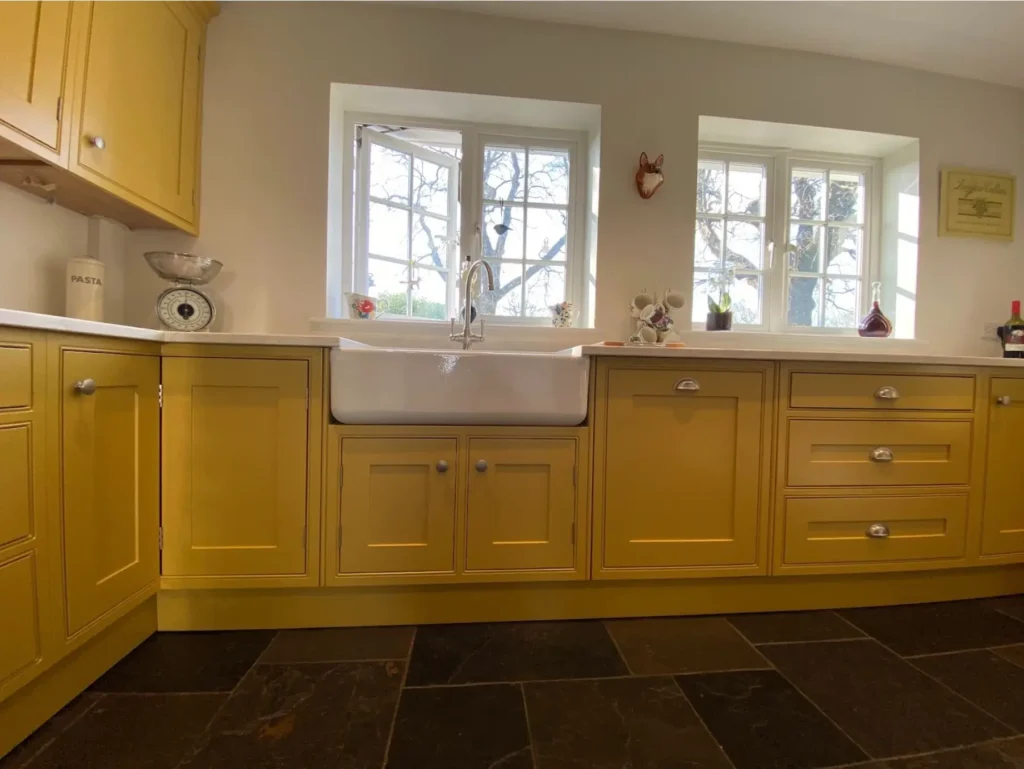
A well-chosen colour scheme can make solid wood feel fresh. Painted cabinetry paired with natural timber accents; a timber island with lighter perimeter units; a soft, modern palette that lets the grain add texture without shouting.
This is also where lighting and worktop choices matter. The goal is balance. You want a kitchen that feels designed, not decorated.
This is the part that tends to get overlooked when people browse inspiration. Beautiful kitchens aren’t just beautiful. They function quietly.
Bespoke kitchen designs let you plan storage around your actual habits: Drawers where you naturally reach; shelves that fit what you own; proper solutions for bins, spices, trays, and the less glamorous stuff that makes kitchens messy.
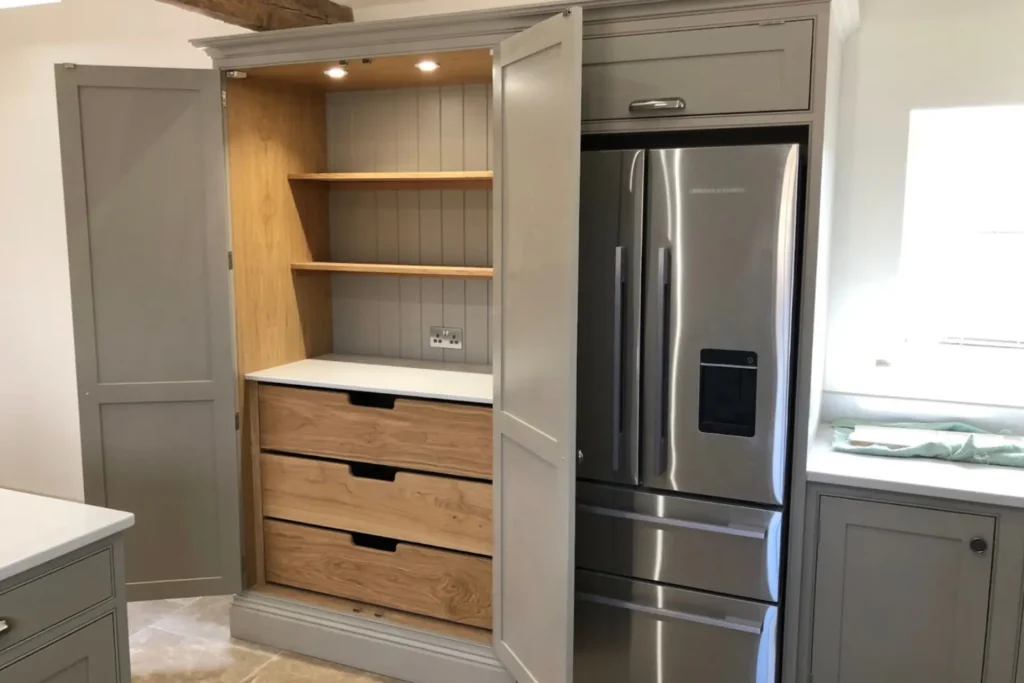
Solid wood kitchens also give you the freedom to design pieces that don’t exist in off-the-shelf ranges: pantry cabinetry, hidden appliance zones, integrated seating, or features that tie in with the rest of the home’s joinery.
Clients who come to Tru English are usually not shopping for the cheapest option. They’re looking for something that feels right. You can sense quality in the weight of a door, the way it aligns, the way it closes, and how consistent the finish looks across the whole room.
That’s what high quality means in a kitchen: Not just materials, but the whole build philosophy.
If you’re considering solid wood kitchen cabinets and you want a kitchen that feels calm, refined, and genuinely built to last, we’d love to talk through your ideas and help shape a design that suits your home.
📧 chris@truenglishbespokejoinery.co.uk
If you want a kitchen that feels substantial and ages well, yes. Solid timber brings depth and character that many modern materials can’t replicate. The value is in longevity and day-to-day enjoyment, not just looks on installation day.
Wood effect finishes can look convincing from a distance, but they don’t have the same texture, weight, or repairability. Solid wood can be refinished and restored, which matters over time. It also feels different in the hand, especially on doors and drawer fronts you use constantly.
They do, as long as the proportions are right. Shaker styles can be refined and minimal, not just traditional. Slimmer frames, cleaner hardware, and a modern colour scheme can make a shaker kitchen feel very contemporary.
Oak is popular for good reason, but it’s not the only option. The best timber choice depends on the look you want and how it sits with the rest of the interior. Sometimes a subtler timber or a painted finish with natural wood accents gives a more balanced result.
Yes, and it’s often a great approach. You can use natural wood to add warmth on an island, shelving, or feature cabinets, while keeping the rest of the kitchen calmer. It helps you get the benefits of timber without it dominating the space.
Start with the light in the room and the mood you want. Warm woods suit softer neutrals and earthy tones, while cooler palettes can look striking with certain timber finishes. The key is making sure the timber grain complements the overall design rather than fighting it.
Timber is a natural material, so movement is always a consideration. Good design and construction manage that through smart joinery, appropriate finishes, and correct installation. In a properly made kitchen, you shouldn’t see warping as “normal”.
Deep drawers, well-planned pantry storage, and tailored internal organisers make the biggest difference. The best kitchen cabinets are designed around your habits, not generic assumptions. It’s often the internal layout that turns a beautiful kitchen into an easy one to live with.
In many cases, yes. That’s one of the main advantages of solid wood, it can often be refinished, touched up, or repaired in a way that looks natural. It’s far less “disposable” than many modern alternatives.
Focus on proportion and detail. Clean alignment, quality hardware, consistent reveals, and a refined finish lift the whole room. Shaker is simple by nature, so the craftsmanship becomes the statement.