
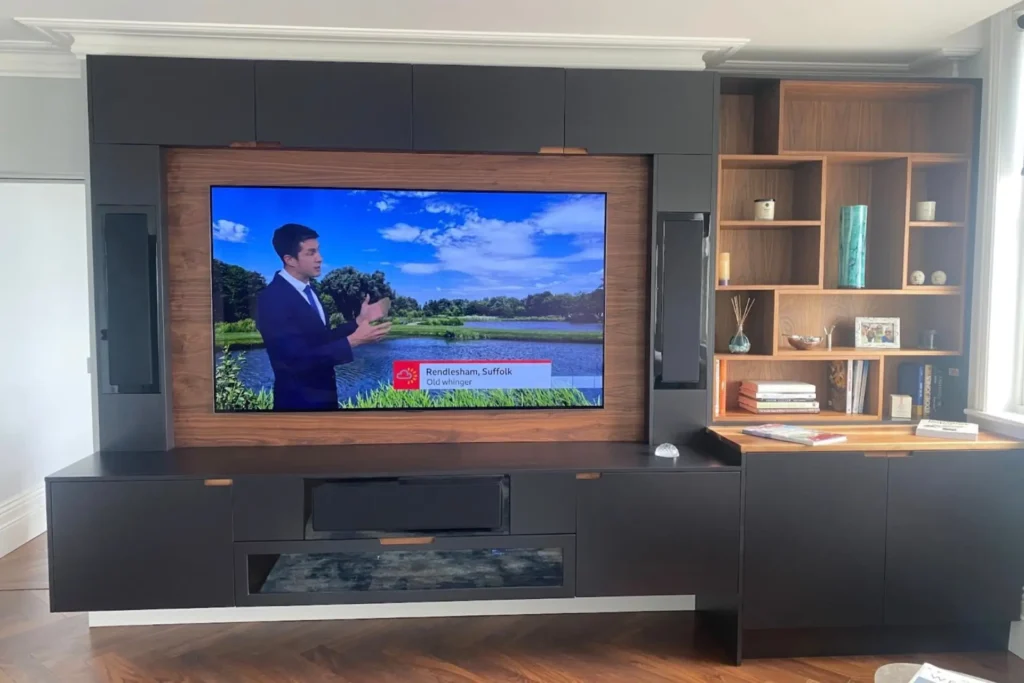
A home cinema room should feel intentional long before the screen lights up. Yes, the equipment matters; a powerful home cinema system, a surround sound system, and properly placed surround speakers all shape the performance. But what turns a cinema setup into a cinematic experience is the way the room itself has been designed.
At Tru English Bespoke Joinery, we approach a home cinema room as both a technical space and a living space. The aim is not just to install equipment that is working perfectly, but to create an immersive experience that feels calm, comfortable, and built into the architecture of the house.
Because the truth is simple. If the cabinetry, seating, lighting, and proportions are not right, even the best screen will struggle to deliver a great experience.
The size of your room dictates everything. In smaller spaces, careful layout is essential. A wall-to-wall media unit with integrated shelving can frame a large screen without overwhelming the room. In larger rooms, deeper cabinetry and acoustic panelling may be appropriate to control sound and improve the viewing experience.
A well designed home cinema installation takes these proportions seriously. Seating distance, speaker placement, and screen height are all considered alongside cabinetry depth and sightlines. When the joinery supports the technical layout, the cinema experience feels natural rather than forced.
Loose equipment stacked on shelves rarely feels refined. A bespoke home cinema room integrates technology so it becomes part of the room’s design rather than something sitting on top of it.
Media walls can house a home cinema system discreetly. Cabinets can conceal amplifiers, streaming devices, and control systems while allowing ventilation and access where needed. Surround speakers can be framed within shelving or acoustic panels so they blend into the home cinema interiors instead of dominating them.
This level of attention to detail is what makes the difference between a standard media room and a space that feels thoughtfully resolved.
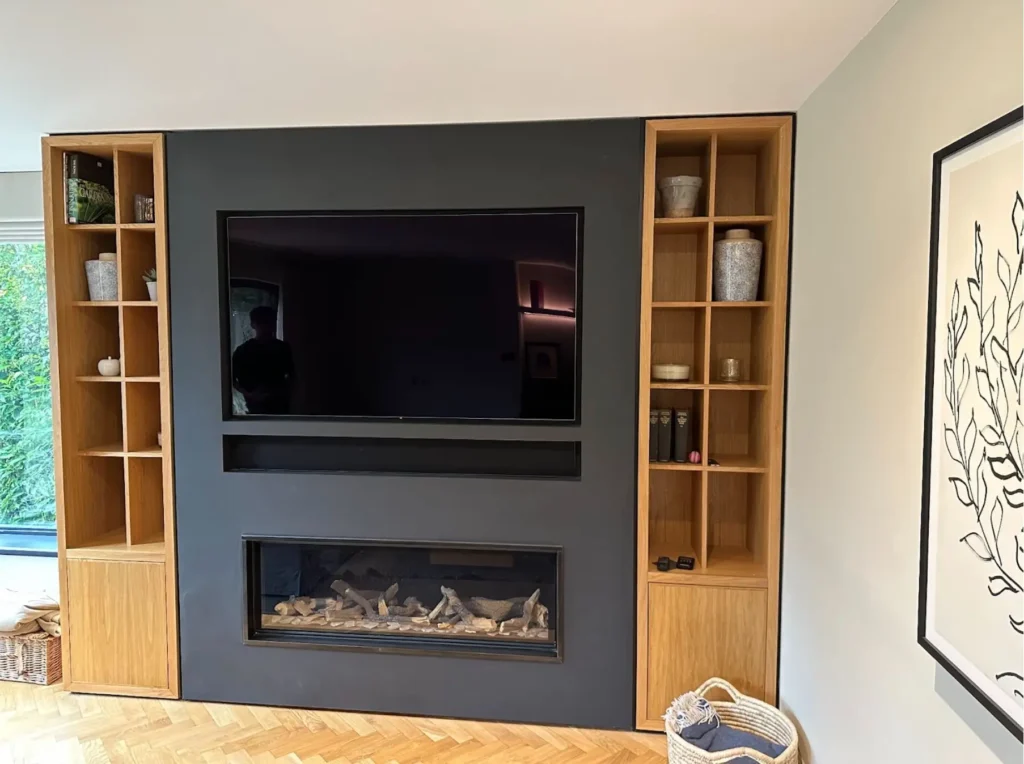
Cinema seating should not feel like an afterthought. A dedicated cinema seat can work beautifully in larger rooms, especially when paired with tiered flooring or subtle platforming. In more flexible spaces, deep sofas or built-in bench seating with tailored cushions may suit the room better.
The key is comfort over spectacle. You should be able to settle in for a full film without shifting constantly. Good proportions and proper spacing between seats contribute just as much to the immersive experience as speaker quality does.
Lighting is often overlooked in a home cinema setup, yet it shapes the mood of the entire space. Integrated strip lighting behind panels, soft wall washers, or subtle floor-level guides can provide enough illumination for safety without distracting from the screen.
Control systems allow you to adjust brightness and colour temperature at the touch of a button. When the lights dim smoothly and the sound fills the room, the transition from everyday living space to cinema experience feels seamless.
Not every project involves a separate theatre-style room. Many homeowners prefer transforming the room they already use, often the living room, into a flexible cinema space for movie night.
A media wall designed with acoustic consideration, concealed storage for equipment, and careful cable management can deliver a strong home cinema system without turning the space into a dark bunker. Shelving can hold books and artwork during the day, then recede into the background once the film begins.
This approach ensures the room remains practical while still offering a genuine cinematic experience when you want it.
Technology evolves quickly. Seemingly every year screens get thinner, speakers become smarter, and control systems change. The joinery, however, provides the long-term structure to accommodate these changes.
When cabinetry is designed around ventilation, access, and adaptable layouts, it supports upgrades without requiring the entire room to be rebuilt. It also ensures that every cable, device, and speaker has a clear place, preventing the clutter that often undermines a home cinema installation.
Clients often tell us the finished space exceeded their expectations because it feels cohesive. For us, how the room works as a whole is a priority.
If you are considering a dedicated home cinema room or upgrading your existing media wall into a more refined cinema setup, we can help design the space around both the technology and the way you live.
Book a design visit and we will explore how to shape a room that delivers an immersive experience without sacrificing comfort or style.
📧 chris@truenglishbespokejoinery.co.uk
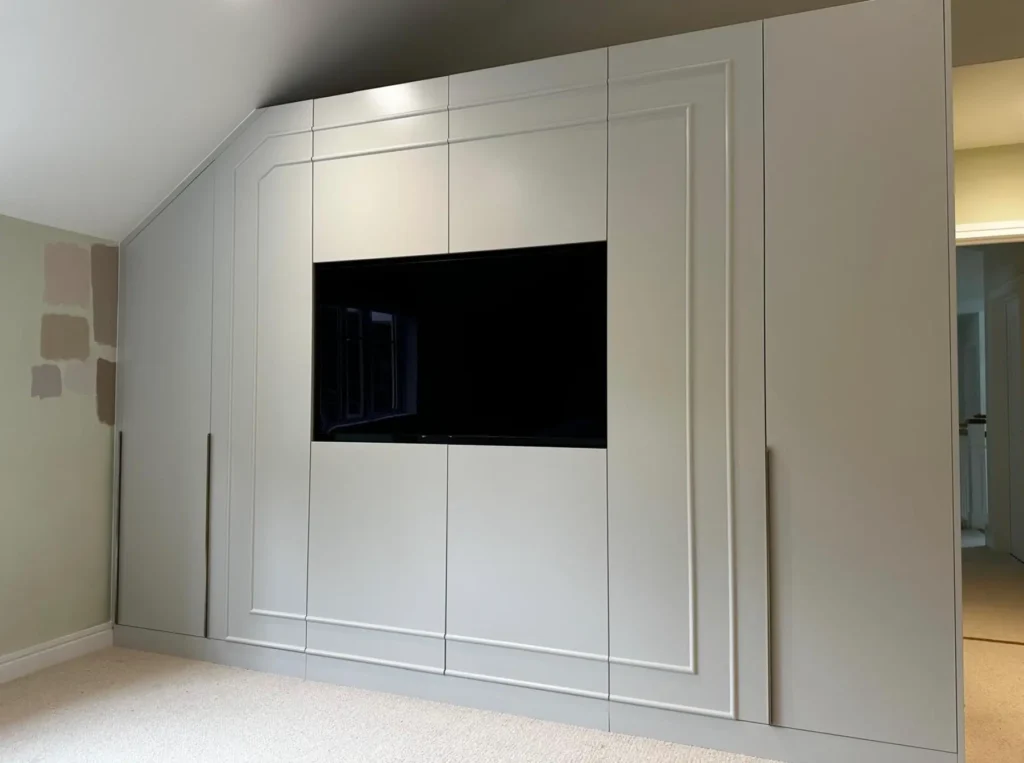
There is no single ideal size, but proportions matter. The screen should feel balanced within the wall, and seating distance must suit the size of your display. We design cabinetry and layouts around these measurements so the viewing experience feels comfortable rather than overwhelming.
Not necessarily. Many homeowners achieve an excellent cinema experience within a living room by using a bespoke media wall, integrated speakers, and discreet storage for equipment. A separate room offers more acoustic control, but it is not essential.
Yes. Amplifiers, streaming boxes, and other components can be concealed inside ventilated cabinets. Proper airflow and access panels are important to keep everything working perfectly while maintaining a clean appearance.
It depends on the size of your room and how you plan to use it. Dedicated cinema seats suit larger spaces, while deep sofas or built-in seating can provide comfort in more flexible rooms. The aim is long-term comfort rather than visual impact alone.
Soundproofing improves the immersive experience and reduces disturbance to the rest of the house. While not every project requires full acoustic treatment, thoughtful material choices and speaker placement make a noticeable difference.
Absolutely. Layered lighting and smart control systems allow the room to shift from bright and social to dim and focused. Proper lighting design enhances the mood without distracting from the screen.
Yes. A media wall can house the screen, speakers, and storage in one cohesive design. It is often the perfect solution for homeowners who want a cinema feel without a dedicated theatre room.
Cables are routed through hidden channels within the joinery. This keeps the room tidy and protects the equipment while maintaining easy access for maintenance or upgrades.
Yes. Balanced finishes, controlled lighting, and integrated storage ensure the space feels inviting even when the screen is off. The room should function as part of the home, not as a separate technical zone.
A design visit allows us to assess the size of your room, understand your equipment preferences, and plan cabinetry that supports both performance and aesthetics. From there, we refine the layout to suit your lifestyle.