
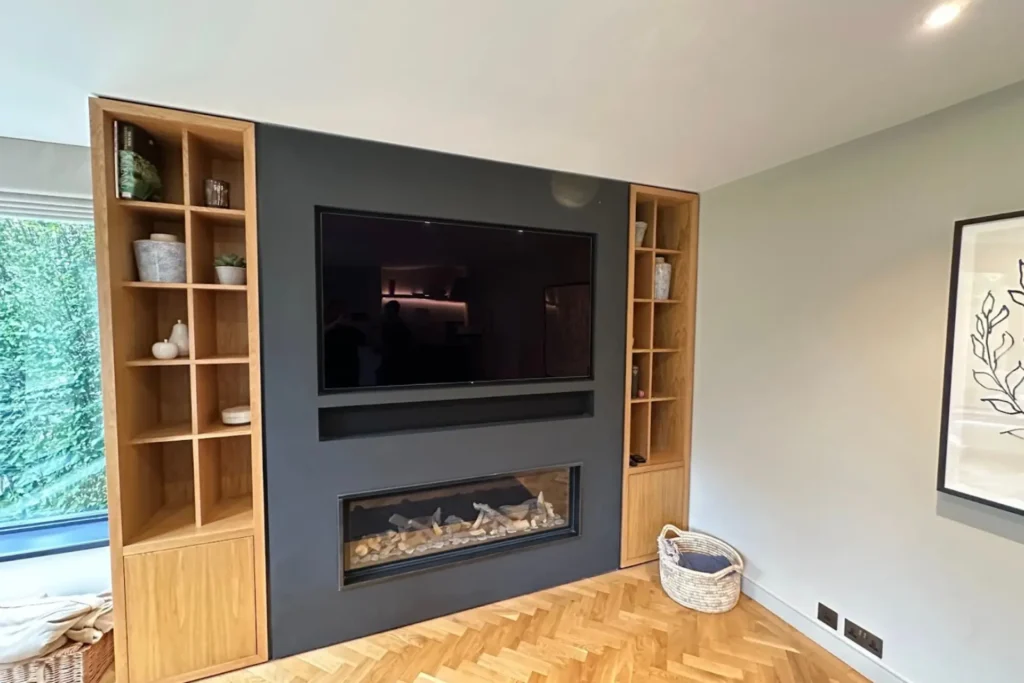
Most people start thinking about a tv and media storage unit when the room begins to feel messy. Wires gather behind the TV stand, remotes drift from one surface to another, and the shelves fill up with a mixture of decorative items, chargers, speakers, and things that never seem to have a proper home. The television may already be the focal point, but the area around it rarely feels calm.
That is where fitted storage starts to make sense in a wider environment, rather than opting for store-bought options.
At Tru English Bespoke Joinery, we often design wall units and media wall with storage features for homeowners who want the television area to feel more resolved. Sometimes that means a full run of cabinetry across one wall. Sometimes it is a lower TV cabinet with carefully planned drawers and shelving. Either way, the aim is the same: make the room easier to live with.
A good TV and media storage unit should do more than hold a screen. It should improve cable management, keep media devices and gaming consoles organised, and help the living room feel clutter free. In this blog, we look at what makes TV media units with storage genuinely useful, how a media wall with storage can change the feel of a room, and what to consider if you want a fitted piece of furniture that looks high quality and works properly day to day.
Before choosing finishes or shelf layouts, it helps to be clear about what the unit actually needs to hold. For many homes, that list includes:
That sounds obvious, but it is often skipped. A unit can look smart in a showroom and still be frustrating once it is full. Good tv and media storage units are designed around the real contents, not an idealised version of the room.
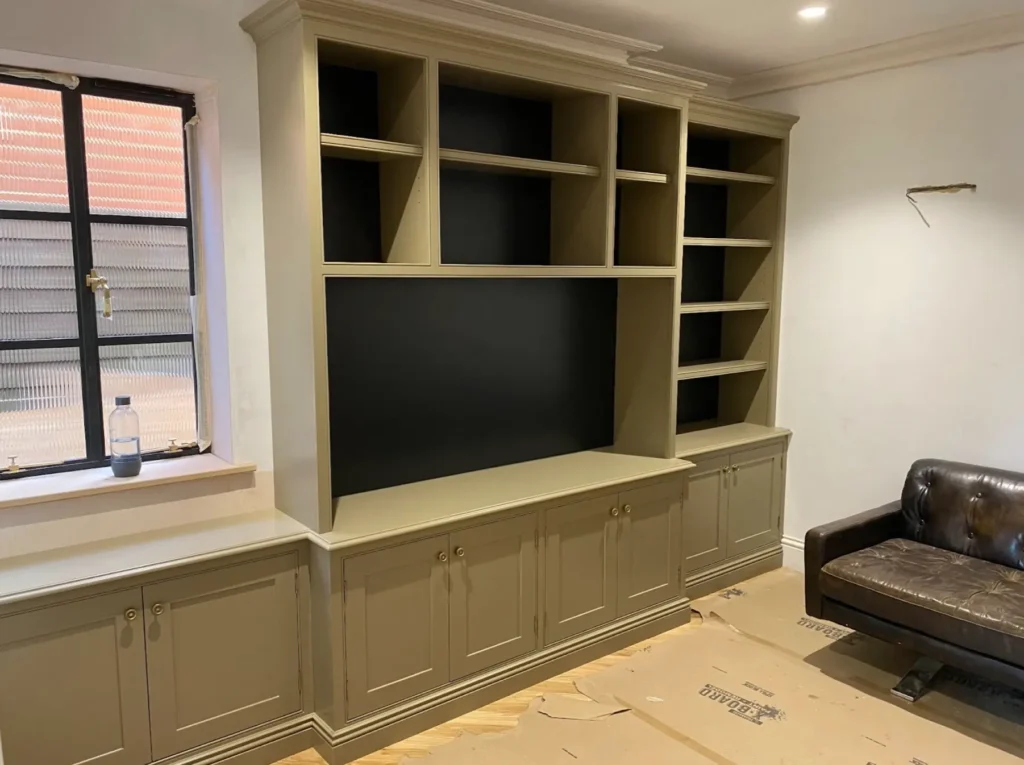
A media unit is a practical feature first. If there is no easy access to sockets, if cable management has been ignored, or if shelves are the wrong size for the equipment, the whole thing becomes harder to use. That is why bespoke joinery works so well here. Storage can be shaped around the exact size of your television, your consoles, and the media devices you already own.
Useful features often include open shelving for boxes that are remotely controlled, closed cupboards for less attractive equipment, and drawers for the smaller items that usually end up scattered around the living room.
A standalone TV unit works well in some rooms, especially where the layout needs to stay flexible. It can keep the wall feeling lighter and may be the right solution if you do not need much enclosed storage.
A media wall with storage is often better when the television area needs to do more. It can create a stronger focal point, frame the screen properly, and bring more order to the room. Full-height wall units can also include display cabinets, shelving for books, and sections that balance practical storage with aesthetic appeal.
The right choice depends on the room, the amount of equipment, and how dominant you want the feature to feel.
The finish matters, but so does proportion. High gloss can suit a sharper, more contemporary scheme, while timber tones often feel warmer and more settled. The best result usually comes from choosing a style that fits the rest of the room rather than trying to make the media area look separate from it.
A high quality fitted unit should feel like part of the house. It should improve the living room rather than simply occupy it.
If your current setup feels cluttered or unfinished, we can help design a TV and media storage unit that suits the room properly. From a low TV cabinet to a full media wall with storage, we can create a fitted solution that improves access, hides the mess, and gives the room a clearer sense of order.
📧 chris@truenglishbespokejoinery.co.uk
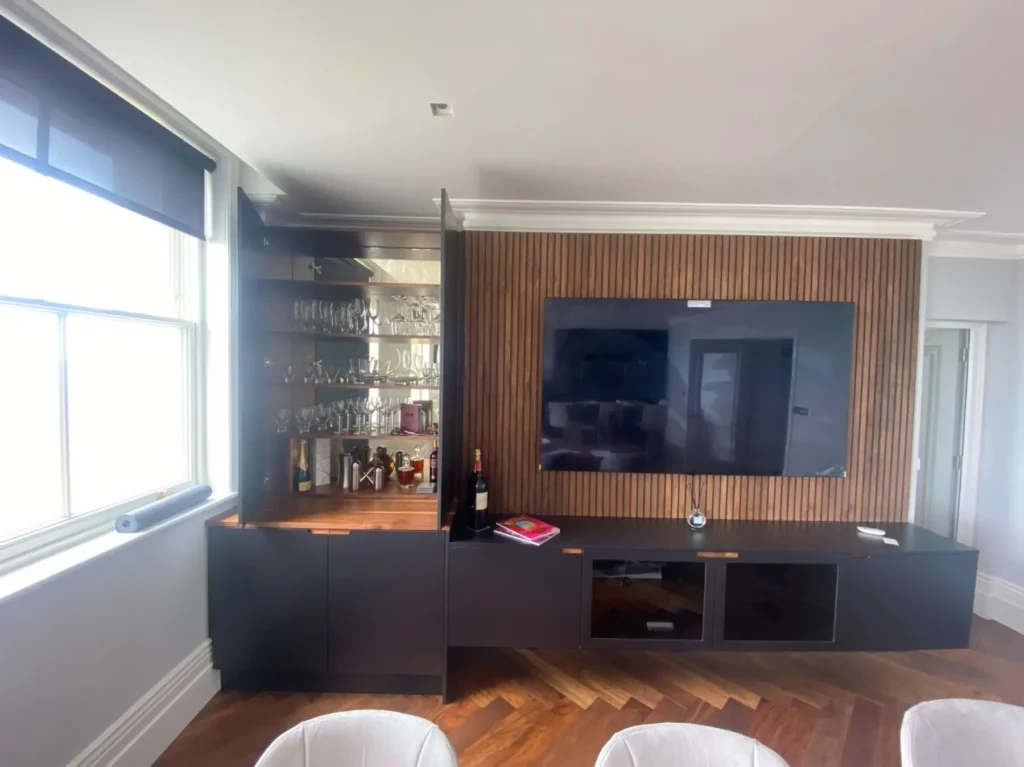
A TV and media storage unit keeps the television area organised and gives the room a more settled look. It also helps with cable management, storage for media devices, and keeping everyday clutter out of sight.
They usually are, especially if you have consoles, boxes, speakers, or a media collection to accommodate. A basic TV stand can hold the screen, but it often does very little to organise everything else around it.
Not always. In some rooms, a lower unit is enough. In others, a full media wall with storage is the better solution because it creates a stronger focal point and provides more practical storage.
Yes, if cable management is built into the design. Hidden channels, access points, and well-planned cupboard layouts make a big difference to how tidy the unit feels once everything is connected.
That depends on the household, but common items include gaming consoles, remotes, streaming boxes, chargers, speakers, and parts of a media collection that you do not want left out on open shelves.
They can, as long as they are balanced properly. Display cabinets are useful for books and decorative items, but they should not crowd the screen or make the wall feel too busy.
It can be, particularly in modern interiors. High gloss reflects light and can look very crisp, though some people prefer timber or painted finishes for a warmer feel.
The main thing is to include enough closed storage for the less attractive items. Open shelving should be limited to things you are happy to see every day, while smaller practical items are better hidden away.
Yes. That is one of the main advantages of fitted joinery. The unit can be built around the exact size of your television, shelves can be set for your equipment, and storage can reflect how you actually use the room.
It is worth considering when freestanding furniture is not solving the problem, when the room feels messy, or when you want the television area to feel more integrated with the rest of the house.