
A home bar is one of those upgrades that instantly changes the atmosphere of a space. It makes a living room feel grown up, a dining room feel more inviting, and a corner that once collected clutter suddenly all feel purposeful. The key is not just the styling, but the structure behind it. A well-designed home bar offers plenty of space for bottles, space for glasses, thoughtful lighting, and storage that actually works the way you serve and socialise.
At Tru English Bespoke Joinery, we build home bars that feel integrated rather than added on. Whether it is a compact home bar cabinet tucked between alcoves or a full height wine bar with open shelving and wine coolers, the goal is the same: A space that’s calm, organised, and easy to use.
So here are ideas for bars in your home that turn an ordinary evening into something a little more memorable.
The best bar for home ideas start with the room itself. A dining room might need something that feels more formal, with cabinet doors that hide the bottles until guests arrive; a living room often works better with open shelving for the pieces you enjoy looking at every day; a hallway or unused recess can benefit from a space-saving drinks cabinet (if not an entire drinks room) that looks like it has always belonged there.
Because the scale and the surroundings vary, the proportions matter. A tall home bar cabinet can add drama. A slimmer bar cabinet for home settings sits quietly until you need it. Both work, but only when they are made with the room’s shape, lighting, and atmosphere in mind.
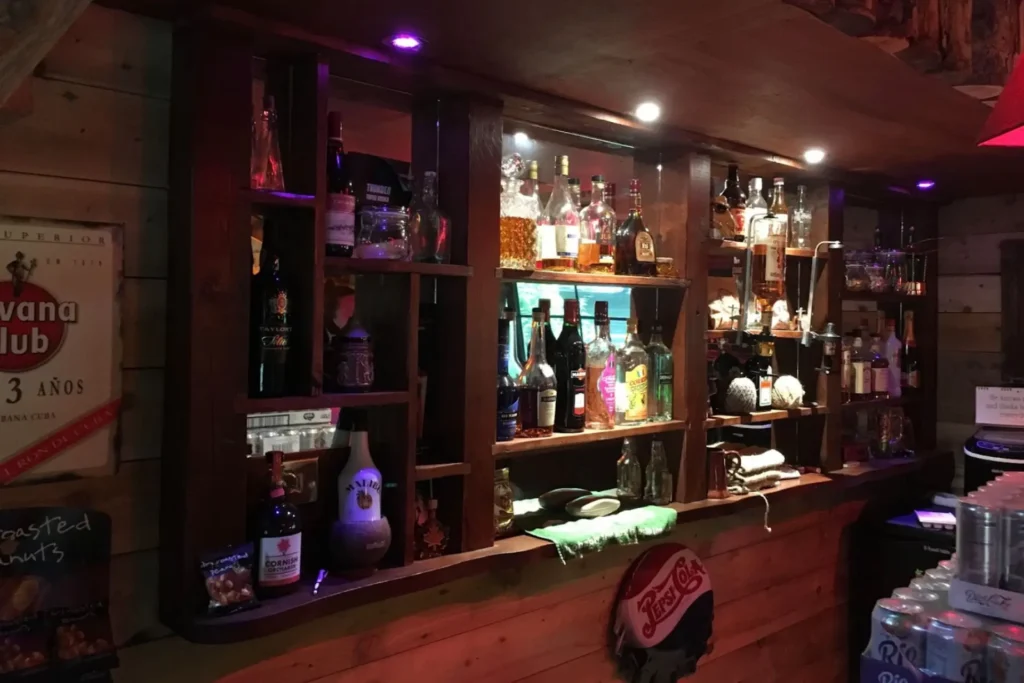
Open shelving has become one of the most popular home bar designs because it brings a relaxed, informal feel to the living space. Bottles become part of the display, glassware catches the light, and introducing a few books or small objects can add warmth to your space.
When we design open shelving for bar cabinets, we often use integrated strip lighting that washes the shelves gently rather than spotlighting every object. It keeps the room soft while still drawing attention to the bar. It also helps you see what you are reaching for without switching on brighter lights.
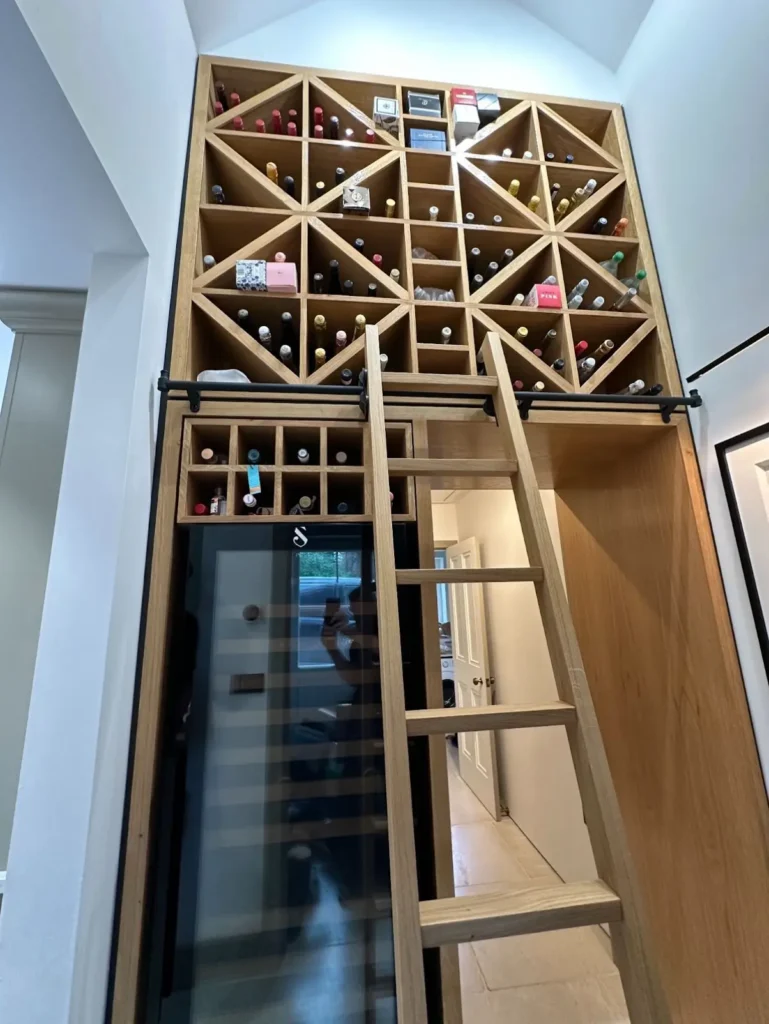
Wine coolers are ideal for a wine bar, but they need to be fitted properly to avoid looking like a forgotten appliance. Built-in cabinetry solves this problem by framing the cooler at the right height and depth.
You can place a cooler beneath a counter for a more understated look, or lift it higher if you want to keep the floor clear. Either way, surrounding it with cabinetry makes the entire bar feel intentional, rather than a space you’re forcing to make work. It stops the cooler from dictating the design and instead allows it to support it.
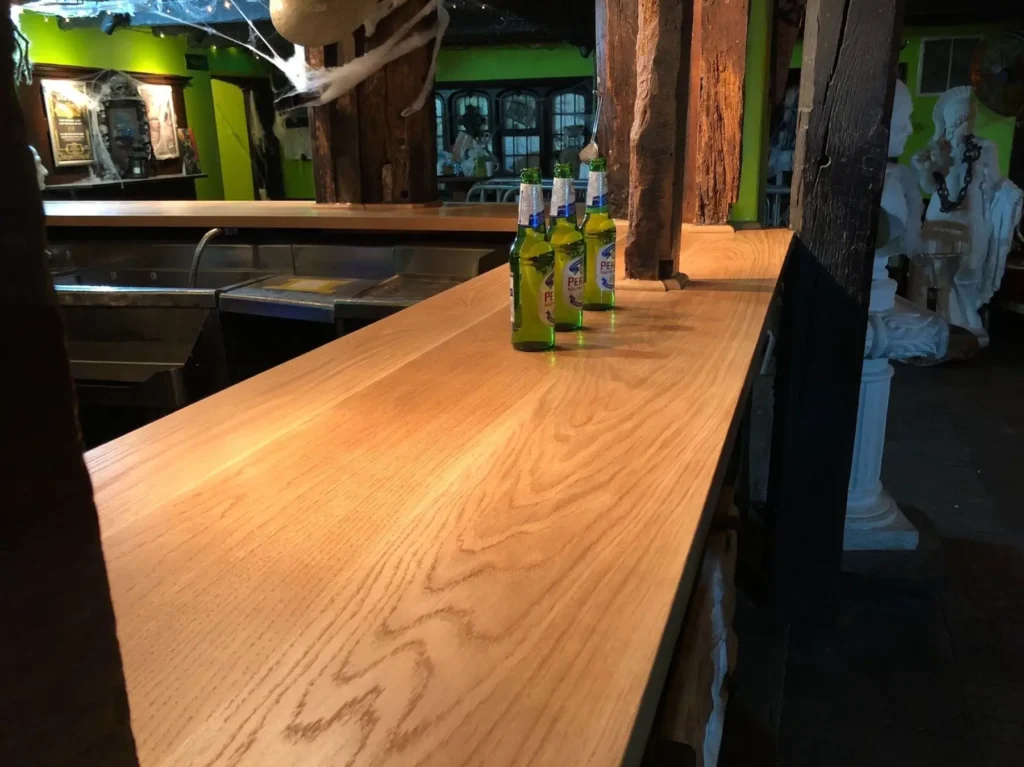
Not every home has room for a large bespoke home bar. Many of the best solutions sit in places people often overlook.
Some ideas include:
Small bars can be just as impressive as large ones. The right proportions make them feel neat and balanced rather than squeezed in.
People often underestimate how much storage a home bar needs until they start using one. You want space for glasses, areas for bottles at different heights, drawers for smaller items, and a counter for mixing drinks. A poorly planned bar becomes cluttered very quickly.
A well planned one offers ample storage without becoming bulky; tall doors can hide shelves for spirits, while pull-out sections can hold wines horizontally. Shallow shelves are also a great option to keep bitters, syrups, and smaller bottles organised. Everything has a place, which makes the bar relaxing to use instead of something you have to manage.
Bar stools can change the personality of a bar instantly. A tall bar with a generous counter becomes a social space, while a lower bar in the living room acts more like a refined drinks station that you pass through rather than gather around.
If the bar is in the dining room, stool height might not be practical, so a pair of side tables nearby can help set the tone. The important thing is that the furniture supports the experience. The bar can be striking, but it should still feel like part of a functioning home.
Home bars benefit from layered lighting just as kitchens and living rooms do. Strip lighting beneath shelves gives soft highlights, and warm downlights inside closed cabinets help you see everything clearly. A gentle backlight behind a wine bar can even add depth without becoming too bright.
Lighting is one of the details that separates a bar that looks good from a bar that feels good. It creates atmosphere, supports visibility, and ties the bar into the wider interior design of the room.
If you’re interested in your own home bar, Tru English Bespoke Joinery can help:
📧 chris@truenglishbespokejoinery.co.uk
A bespoke home bar can be tailored exactly to the room. It fits the proportions, hides cables and appliances, and offers the right storage for bottles, mixers, and glasses. Freestanding units often look disconnected and rarely offer the calm, structured appearance a built-in bar provides.
Compact bars work beautifully in smaller homes. Alcoves, corners, hallways, or spaces between chimney breasts can all host a slim drinks cabinet or wall mounted bar. The key is choosing a cabinet design that uses vertical space and keeps the floor clear.
Yes. Many homeowners prefer a dining room bar because it keeps drinks close to the table while maintaining a tidy atmosphere. Closed doors, tall cabinets, and calm finishes help it feel elegant rather than informal.
Not necessarily. Wine coolers are useful for people who entertain often or collect wine. If you prefer a simpler setup, shelving and drawers may be enough. The main thing is to design the bar around how you actually drink and host.
The right mix of open shelving and hidden storage makes a huge difference. Everyday pieces can stay visible, while less decorative items live behind doors. Soft lighting and considered spacing also help the bar feel intentional.
Yes. A small sink adds convenience for rinsing glasses and making drinks. It simply requires plumbing access, which we can plan into the cabinet design during the early stages.
A comfortable stool setup usually requires a deeper counter and enough clearance behind each seat for people to move past. If that is not possible, a standing height bar without stools works well, especially in a living room.
Matte lacquers, natural timbers, fluted fronts, and subtle metal accents all age well and sit comfortably in a modern interior. Lighting can be used to enhance texture without drawing attention away from the room.
Yes. Lockable cabinets, higher shelving, and secure door hardware help keep bottles and sharp tools out of reach. The bar can remain stylish without sacrificing safety.
A design visit helps define style, proportion, storage needs, and the best place for the bar. Once we understand the layout of your living room or dining room, we can sketch a bespoke solution that enhances the space.