
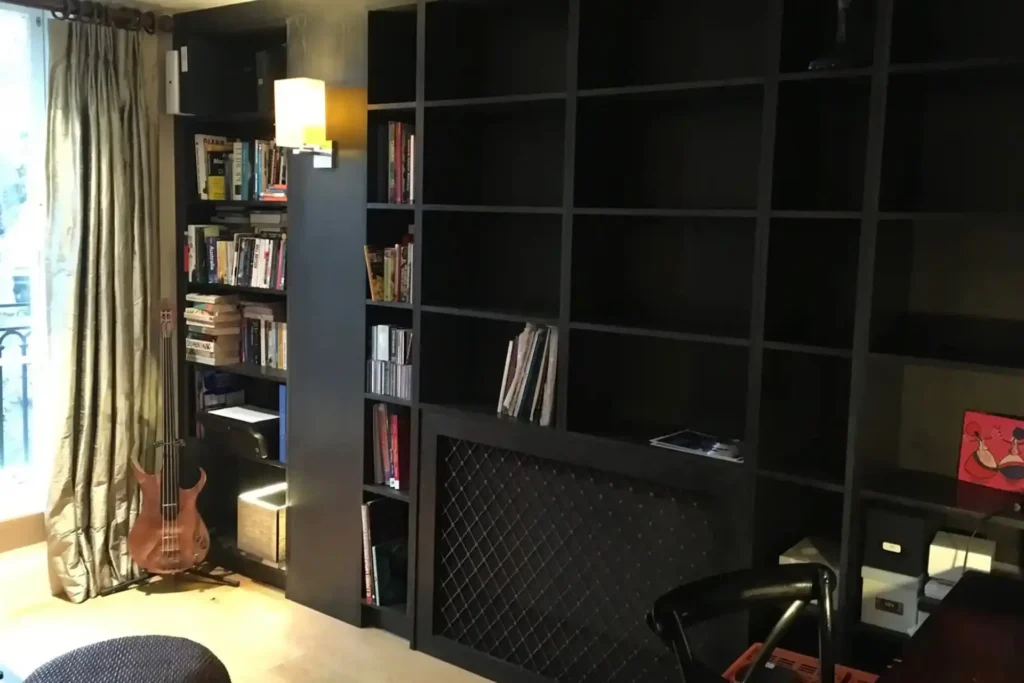
Fitted shelves are usually commissioned for one of two reasons. Either there is not enough storage, or the storage that is already there has never looked quite right.
Perhaps you have an alcove where every standard shelving unit leaves a strange gap. Maybe the living room has become a careful arrangement of books, photographs, speakers and things you have nowhere else to put. Sometimes it is just an empty wall that could be doing a better job. Or, perhaps you’re simply ready to turn the house into a home and upgrade your out-of-the-box solutions with something that feels more you.
Our bespoke libraries and shelving are designed around the home they are going into. Basically, that means working with the exact dimensions of the room, rather than choosing the nearest available size and hoping the skirting board does not cause trouble.
Quick Summary
Fitted shelving makes better use of alcoves, chimney breasts, full walls and other spaces where standard furniture can feel awkward. A high quality joinery company can take you from a house to a home through all these finer details.
The design can include open shelves, cupboards, drawers, lighting and cable access. More importantly, the shelf sizes and layout can be planned around what you actually own and what fits your space. From paperbacks and records to larger ornaments and television equipment.
Why Choose Fitted Shelves?
There is nothing wrong with freestanding furniture when the measurements work. When they do not, even a small mismatch can become surprisingly noticeable.
A unit that is slightly too narrow leaves two awkward strips of unused space. One that is too deep pushes further into the room than expected. In older properties, walls and floors may also have a few opinions of their own about what counts as a ‘straight’ or ‘flush’ finish.
Fitted shelving is measured and made for that particular room. It can take account of:
- Uneven walls and floors
- Skirting boards, cornices and picture rails
- Plug sockets and switches
- Radiators, pipes and cables
- Televisions, speakers and media equipment
- The size and weight of the items being stored
The construction can then be chosen to suit the design. Traditional joinery includes a wide range of methods for connecting timber, but there is no single joint or technique that is right for every shelving unit. The span of the shelves, the material and what they need to carry all make a difference.
What Are the Shelves Actually For?
This is one of the first things worth deciding.
We know it sounds obvious, but shelves are often designed as a series of neat, equal openings before anyone has measured the books, records or equipment that need to go inside them. The result looks orderly until the first oversized hardback arrives.
Before settling on a layout, consider:
- Which items need to be stored.
- What you want to keep on display.
- What would be better behind cupboard doors.
- How often different items are used.
- Whether sockets, lighting or cables need to be included.
A combination of open and closed storage often works well. Books, artwork and favourite objects can stay visible, while paperwork, chargers and the less photogenic parts of daily life can go into the cupboards below.
Where Can Fitted Shelving Be Used?
Living-room alcoves are the obvious answer, although fitted shelving can be useful throughout the house. We aren’t going to sit here and shamelessly tell you the obvious, but it does help to have some inspiration on what could be done when you aren’t limited by the quirks and shapes of your home:
| Room | Possible Design | What It Could Hold |
| Living room | Shelves with cupboards below | Books, games and media equipment |
| Home office | Full-height fitted shelving | Files, reference books and equipment |
| Bedroom | Open shelves with drawers | Books, clothing and personal items |
| Dining room | Painted or timber cabinetry | Glassware, ceramics and serving dishes |
| Hallway | Slim custom shelving | Keys, post, baskets and everyday belongings |
The materials used for interior fitments can vary considerably, from solid timber to veneered and painted boards. Each option has its own appearance, practical qualities and cost, so the choice should be made as part of the wider design rather than treated as an afterthought.
Making Better Use of Alcoves
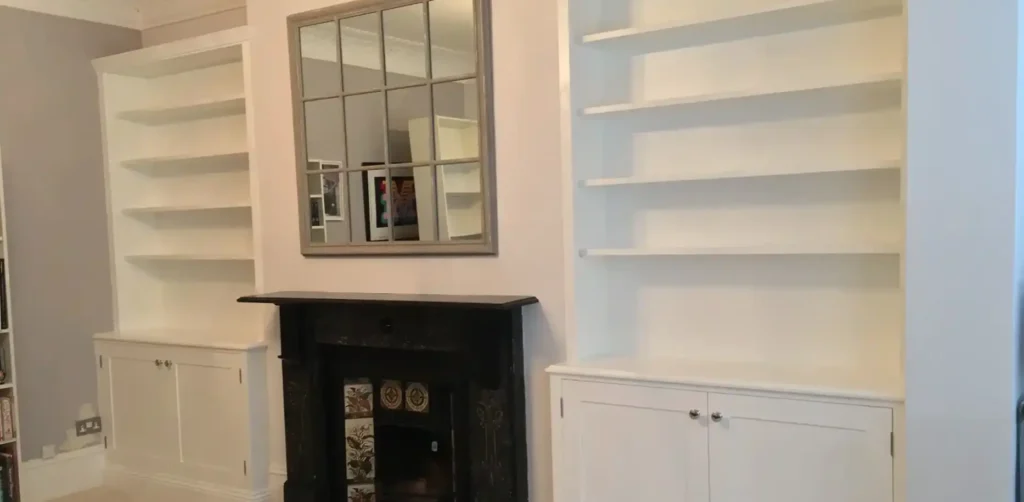
Alcove shelving is particularly common in homes with a chimney breast. These recesses can look as though they should be useful, yet their dimensions often make standard furniture difficult to place neatly.
Made-to-measure alcove shelving can use the full width and height available. Open shelves are often fitted above cupboards, giving the room both display space and enclosed storage.
Do Both Alcoves Have to Be Identical?
Not at all! In fact, asymmetry can make a really nice aesthetic. And with bespoke shelving, it’s easy to make a result that suits you and fits your space.
One side may need to accommodate a television, while the other is intended for books. One cupboard could contain drawers and the other may need a larger open section for equipment.
They Should Feel Related, Not Repeated
The proportions, doors, handles and finishes can create a consistent appearance without forcing both sides into the same layout.
This usually produces a more useful result and avoids designing around symmetry at the expense of how the room is actually used.
Choosing a Style That Suits the House
Fitted shelving can be traditional, contemporary or somewhere between the two.
In an older property, framed doors, moulded details and painted finishes may sit comfortably alongside existing features. A newer home might suit clean lines, natural timber or floating shelving with concealed fixings.
Furniture styles have always changed alongside the homes and habits of the people using them. The V&A furniture collection is a good reminder of just how varied cabinetry and furniture design can be. Now, this isn’t to say that your nice new, hand made fitted shelves need to recreate a historic piece; but they should feel considered in relation to the room around them.
Possible styles include:
- Painted bookcases with cupboards below
- Natural timber shelving
- Floating shelves
- Full-height library shelving
- Shelving combined with drawers or display lighting
The aim is not to add every available feature. It is to decide which details will make the shelving more useful and which will genuinely suit the space.
Bespoke Fitted Shelving from Tru English
At Tru English Bespoke Joinery, we design and hand make fitted furniture for individual homes.
A project might involve a full library wall, a pair of alcove units or a few custom shelves for a smaller area. Whatever the scale, we begin with the room, the property and what you need the finished piece to hold.
That is how fitted shelves should be approached: not as a standard unit adjusted at the edges, but as furniture designed properly for its surroundings.
To talk through an idea for your home, contact Tru English Bespoke Joinery or call 01403 915857.
If you enjoyed this read, you may also like: Bespoke Wardrobes Or IKEA PAX? How To Choose What Suits Your Home.
Frequently Asked Questions About Fitted Shelves
Fitted shelves are worth considering when standard furniture leaves awkward gaps or does not make proper use of the space. Because they are designed around the room, they can offer more storage without making it feel crowded. They also tend to look more settled than a unit that has simply been placed against the wall.
Yes, alcoves are one of the most common places for fitted shelving. Shelves can use the full width and height of the recess, with cupboards or drawers added below if you need enclosed storage. Each side of a chimney breast can be designed differently while still looking like part of the same scheme.
They do not need to be identical. One side might hold a television while the other is used for books, records or display pieces. Matching the overall proportions, materials and finish is usually enough to make them feel connected.
Yes, the shelving can be designed around the exact size and position of the television. Space can also be allowed for speakers, consoles, sockets and cables so the finished unit remains tidy and easy to use. It is worth planning for any equipment you may add later rather than measuring only what is there today.
The right depth depends on what you intend to store. Paperbacks need less room than large art books, vinyl records or audio equipment. Measuring a few of your larger items before the design is agreed can prevent shelves that look lovely but are not quite deep enough.
Yes, open shelving can be combined with cupboards, drawers or a mixture of both. This gives you somewhere to display books and decorative pieces while keeping paperwork, cables and everyday clutter out of sight. The internal layout can be planned around the belongings you already have.
Uneven walls are one of the reasons bespoke shelving can work so well. The unit can be measured and made to follow the actual shape of the room rather than assuming everything is perfectly straight. This is particularly useful in older homes, where walls and floors often have a little character of their own.
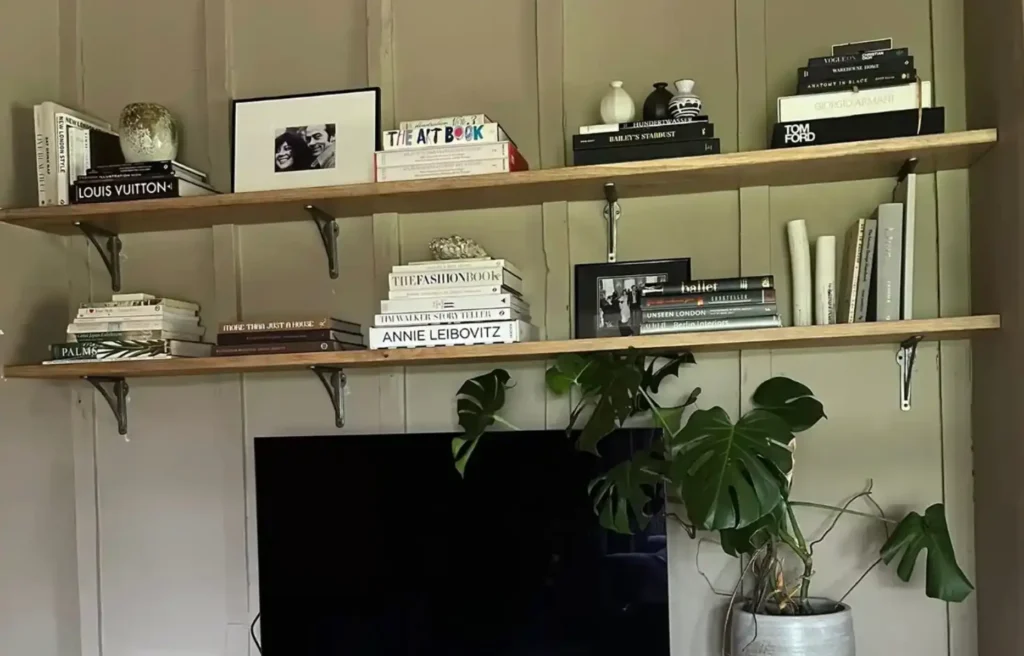
Floating shelves can hold books when they are properly designed, supported and fixed to a suitable wall. The shelf length, material, wall construction and expected weight all need to be considered. A long row of heavy hardbacks requires a different approach from a short shelf holding a few photographs.
Yes, the proportions, timber, paint colour and details can be chosen to work with the furniture and joinery already in the room. That might mean matching existing doors and mouldings or choosing a simpler finish that sits quietly alongside them. The aim is for the new shelving to feel connected without necessarily copying everything exactly.
The timescale varies depending on the size and complexity of the design. A straightforward pair of alcove units will usually involve less work than a full library wall with cupboards, lighting and detailed joinery. Tru English Bespoke Joinery can provide a clearer schedule once the room has been measured and the design agreed.