
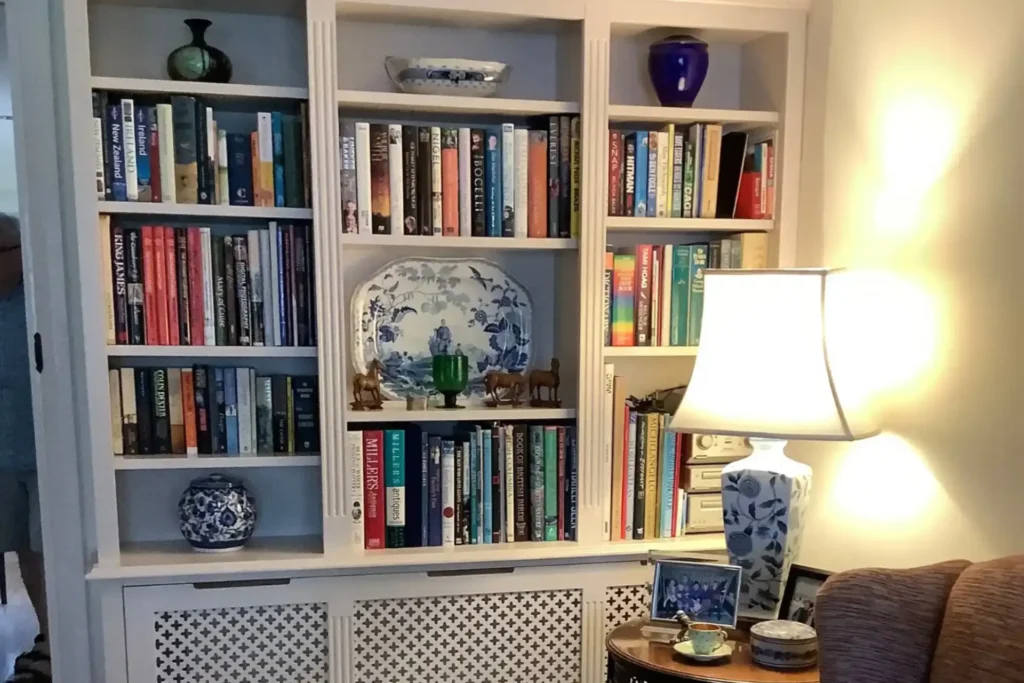
A home library can be a whole room, a carefully planned wall or a quiet corner that gives your collection somewhere better to live than three wobbling shelves and a pile beside the bed. The best designs use awkward space properly, make reading more inviting and give the room a purpose.
At Tru English Bespoke Joinery, we design fitted home libraries around the room, the books and the people using it. That might mean floor-to-ceiling shelves in a study, built-in shelving around a doorway or a small home library with a window seat in an alcove.
Quick Summary
A successful home library starts with the books you own, the available space and how you like to read. Bespoke home library shelving can accommodate different sizes, use the full height of a wall and integrate seating, lighting, cupboards or a library ladder. It should feel like part of the room, not furniture standing in it.
Start With the Books, Not the Pinterest Board
There is no shortage of home library ideas online, but the sensible first question is not “what colour should the shelves be?” In actuality, a better starting point is “what needs to fit on them?”
Novels, art books, folders and treasured editions require different shelf heights and depths. A wall of identical openings may look tidy in a drawing but waste space once real books arrive. Even the basic bookcase has taken many forms, and bespoke joinery provides more freedom than one repeated compartment.
Before the design begins, consider:
- How many books you own, plus room to grow
- Which titles need to remain within easy reach
- Whether you want to display art or personal objects
- Whether lower cupboards are needed
- If the room will also be used for work or relaxation
This is where made-to-measure libraries and shelving earn their keep. The shelving is planned around your book collections rather than asking them to behave around the shelving.
Home Library Shelving That Belongs in the Room
A fitted home library should look settled. In period homes, that may mean cabinetry shaped around chimney breasts, skirting, cornicing and uneven walls. In newer properties, clean lines, floating shelves or a full-width painted unit may feel more natural.
| Design Choice | Where It Works Well | What It Adds |
| Floor-to-ceiling shelves | Large walls and dedicated rooms | Maximum storage and a strong feature |
| Built-in shelving | Alcoves and awkward corners | A precise fit with little wasted space |
| Floating shelves | Smaller interiors | Display space with less visual weight |
| Closed base cabinets | Family rooms and studies | Hidden storage beneath the books |
| Library ladder | Tall rooms | Access to upper home library bookshelves |
A library ladder may look grand, but it must work as part of the design. The rail position, shelf heights and available floor space all need to make practical sense.
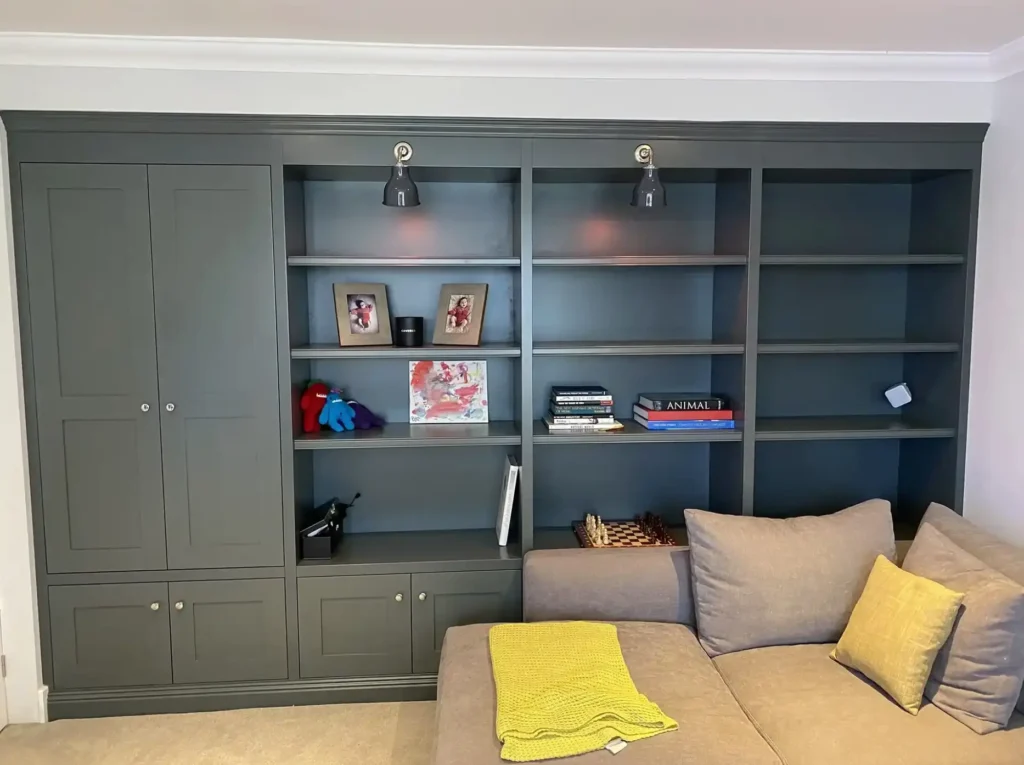
Make Space for Reading, Not Only Storage
Bookshelves can dominate a room when every decision is based on capacity. A reading area gives the library a reason to be used rather than admired from the doorway.
A Reading Nook You Will Actually Sit In
Comfortable seating does not require an enormous armchair in a small room, it just takes some considered interior design. A fitted window seat can use the space beneath a window, with drawers below and shelving around it. Elsewhere, a compact chair, side table and adjustable task lighting may be enough.
Natural light makes a reading nook inviting, although valuable books should not spend years in strong direct sunshine. The National Archives explains how exposure to light can permanently damage paper-based materials, so shelf positioning, curtains or blinds may form part of the plan.
Home Library Ideas for Smaller Spaces
A small home library does not need a dedicated room. It needs a clear plan and fewer wasted centimetres.
- Use the full wall. Shelving above doors or within alcoves can recover space freestanding furniture misses.
- Combine functions. A fitted desk, reading nook and book storage can share one wall.
- Mix open and closed storage. Cupboards below and shelves above stop a compact room feeling overcrowded.
Our bespoke home studies and offices can combine working storage with home library bookshelves, useful when the spare room must earn its title rather than spending the year hosting a clothes horse.
Lighting and Details Matter
Task lighting should fall where the book will be held, not merely brighten the ceiling. Integrated lighting adds depth and makes titles easier to find, while a wall or floor lamp creates a comfortable pool of light around the seat.
Shelf adjustability, sockets, cable routes and display proportions should be decided early. For book lovers, the aim is not simply to store your books, but to make the collection easy to browse and enjoyable to live with.
The Reading Agency explores how reading for pleasure can support wellbeing and connection. A thoughtful library cannot make you finish the novel laying beside the bed since 2022, but it can remove several excuses.
Creating a Bespoke Home Library With Tru English
Every collection and every room is different. We design and handcraft home library shelving around both, from understated fitted shelving to complete library rooms with seating, lighting, cabinetry and floor-to-ceiling storage.
Speak to Tru English Bespoke Joinery about a home library designed for your space, your books and the way you live by visiting Tru English Bespoke Joinery or call 01403 915857
If you liked this, you may also like: Built-In Office Furniture Ideas for Rooms That Need Proper Planning.
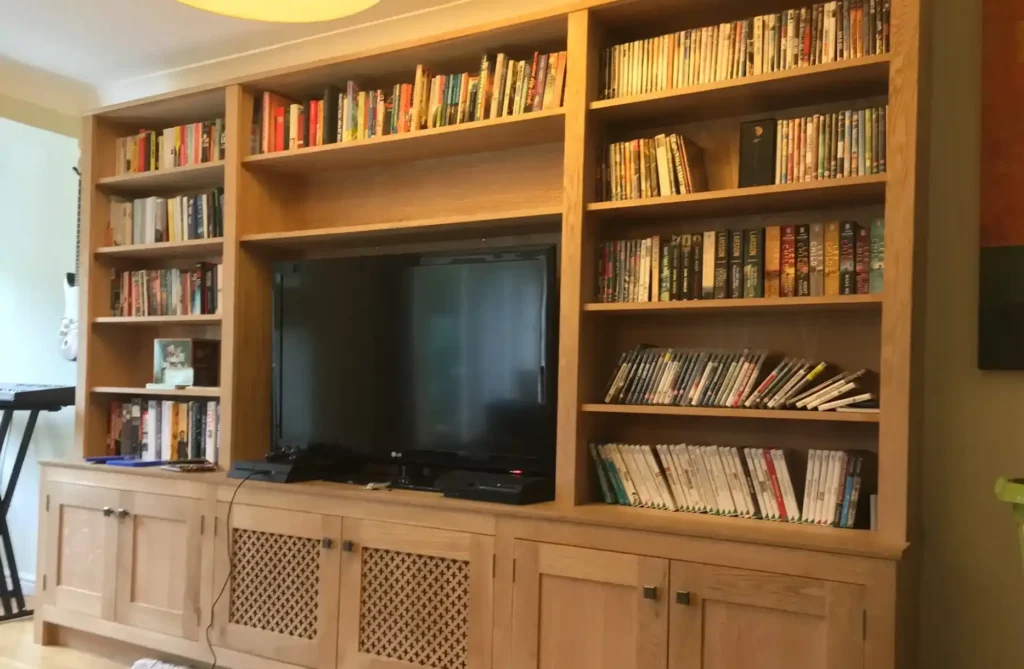
Frequently Asked Questions About Home Library Ideas
A home library does not need its own room. A single fitted wall, an alcove or an unused landing can provide enough space for bookshelves and a small reading area. Good design matters more than square footage.
Bespoke shelving makes better use of the room because it can be built around sloping ceilings, chimney breasts, doorways and uneven walls. It also allows the shelf heights and depths to suit your actual book collection. The result usually feels more permanent and considered than freestanding furniture.
Yes, a small home library can work very well when the design uses the full height of the walls. Floor-to-ceiling shelves, fitted cupboards and a compact reading nook can provide plenty of storage without making the room feel cramped. Lighter finishes and carefully planned lighting can also help.
The right depth depends on what you plan to store. Standard novels require less depth than large art books, folders or display pieces. Bespoke home library bookshelves can include a mixture of shelf depths to avoid wasting space.
Adjustable shelves are useful when your collection includes books of different heights or may change over time. Fixed shelves can still be used where extra structural support or a particular visual rhythm is required. Many fitted libraries combine both.
A window seat can make excellent use of the space beneath a window while creating a comfortable reading nook. Drawers or cupboards can often be built underneath for additional storage. Shelving can then be fitted around the window to frame the area.
Not always. Frequently used books can be kept on the lower shelves, with decorative items or less regularly accessed books placed higher up. A library ladder may be included where the ceiling height and available floor space allow it to operate safely.
A combination of general lighting and focused task lighting usually works best. Wall lights, adjustable lamps and integrated shelf lighting can make reading easier while helping the room feel warmer. Natural light is useful, although books should be protected from prolonged, strong sunlight.
Yes, a fitted home library can easily combine book storage with a desk, filing cupboards and concealed cable management. This works particularly well in studies, spare rooms and quieter corners of the home. The joinery can be designed so the working and reading areas feel like one coherent space.
Mixing open shelves with closed cupboards is one of the easiest ways to keep the room balanced. Books can remain visible while paperwork, cables and less attractive items are stored behind doors. Leaving some breathing space between books and display objects also helps the shelving feel calmer.