
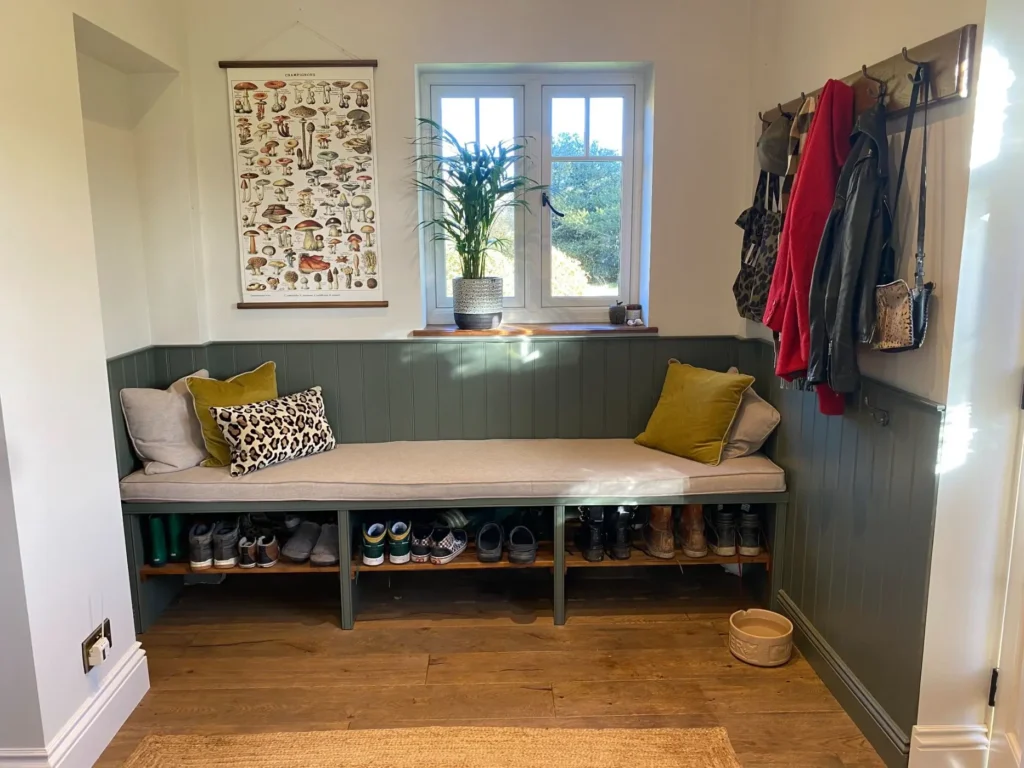
Boot room ideas tend to look wonderfully orderly in photographs: coats neatly hung, shoes lined up and perhaps a pair of suspiciously clean wellies by the door. Real boot rooms have a slightly harder job.
They need to cope with wet coats, muddy shoes, school bags, dog leads, umbrellas and all the other things that arrive home with us. Good boot room design is therefore less about creating somewhere attractive to hang a coat and more about giving everyday clutter somewhere sensible to go.
Boot room ideas work best when storage is planned around what actually comes through the door. A combination of coat storage, shoe drawers or cupboards, seating and durable materials can turn an entrance or utility area into a hardworking part of the home. Bespoke fitted furniture can also make use of awkward corners and wall space while keeping everyday essentials easy to reach.
Before deciding where the boot room bench should go or what colour to paint the cabinets, make a list.
What regularly arrives through this particular door?
For one household, it might be four pairs of shoes and a couple of coats. For another, the list could involve children’s school bags, walking boots, sports equipment, dog towels, leads, umbrellas and enough outdoor clothing to suggest everyone is preparing for an expedition.
Those differences matter.
Some useful categories to consider include:
The aim is not necessarily to hide absolutely everything. Frequently used items need to remain convenient, while the things you would rather not look at can disappear behind doors and into drawers.
That balance between open and concealed storage is one of the most important decisions in a successful bespoke boot room.
The best boot room storage ideas tend to involve several different types of storage rather than one enormous cupboard attempting to solve everything.
Shoes have an impressive ability to spread across an entrance.
Open shelving makes everyday pairs easy to reach and gives damp footwear more opportunity to air. Drawers and cupboards create a tidier appearance but need to be sized appropriately for what will actually live inside them.
Boots deserve particular attention. A shelf designed around trainers is not much help when somebody attempts to introduce a pair of tall wellies.
With fitted boot room furniture, shelf heights, drawer depths and individual compartments can be planned around the household rather than relying on generic dimensions.
There is a temptation to put doors on everything in pursuit of an immaculate room. That can look beautiful, but a boot room still needs to be easy to use.
Everyday coats, shoes and bags are often more useful within reach. Seasonal clothing, spare accessories and less attractive household supplies can sit behind closed boot room cabinets.
This gives the room some breathing space without expecting everyone to open three cupboard doors every time they come home.

A boot room bench is one of those features that earns its floor space surprisingly quickly.
Most obviously, it provides somewhere to sit while taking shoes on and off. It can also divide the room visually, create a useful surface for bags and provide additional storage underneath.
A fitted bench might incorporate drawers, lift-up storage or open shoe compartments below. It can also sit between taller cabinets so the whole arrangement feels like one piece of furniture rather than several unrelated storage solutions.
The proportions matter here.
A bench needs enough clear space around it to be genuinely useful. There is little point carefully designing somewhere to sit if the person using it has to negotiate a collection of shoes, an open cupboard door and somebody else’s backpack first.
A few decorative hooks can look lovely. A family’s worth of winter coats may have other ideas.
Good boot room coat storage starts with quantity. Consider how many coats need to be accommodated on an ordinary day and whether there are bulkier outdoor jackets that require more depth.
Open hooks work particularly well for frequently used coats and children’s belongings because everything remains easy to grab. Enclosed cupboards create a calmer appearance and can provide hanging rails at different heights.
Combining the two is often particularly effective.
You might have hooks above a bench for the things being used every day, with full-height boot room cabinets taking less frequently worn coats, bags and seasonal clothing.
Hooks can also be positioned at sensible heights for the people using them. Giving children accessible storage makes it considerably more likely that a coat will reach the hook rather than developing a long-term relationship with the floor.
Some of the most useful boot room storage ideas are above eye level.
High cupboards can accommodate items that don’t need to be accessed every day, leaving the most convenient parts of the room available for frequently used belongings.
With fitted boot room furniture, cabinetry can extend to the ceiling rather than stopping at an arbitrary standard height and leaving a strip above that is mostly useful for collecting dust.
This can be particularly valuable in a smaller boot room where floor space is limited.
Tall cabinetry can also help make the room feel more intentional. Instead of filling it with separate shoe racks, coat stands and baskets, one fitted scheme can provide several kinds of storage within the same footprint.
Not every home has a perfectly proportioned room waiting patiently to become a boot room.
Sometimes the available space is a narrow entrance, part of a utility room, an awkward area beside the back door or somewhere with alcoves, sloping ceilings and uneven walls.
These are exactly the spaces where a bespoke boot room can make sense.
Made-to-measure cabinetry can work around existing architecture rather than requiring the room to accommodate standard furniture. A shallow cupboard might make use of a narrow wall, while a fitted bench can occupy an alcove that would otherwise do very little.
At Tru English Bespoke Joinery, our approach to custom cabinetry and bespoke joinery starts with the room itself. The dimensions, architecture and storage requirements can all inform the furniture rather than trying to squeeze a predetermined collection of units into the available space.
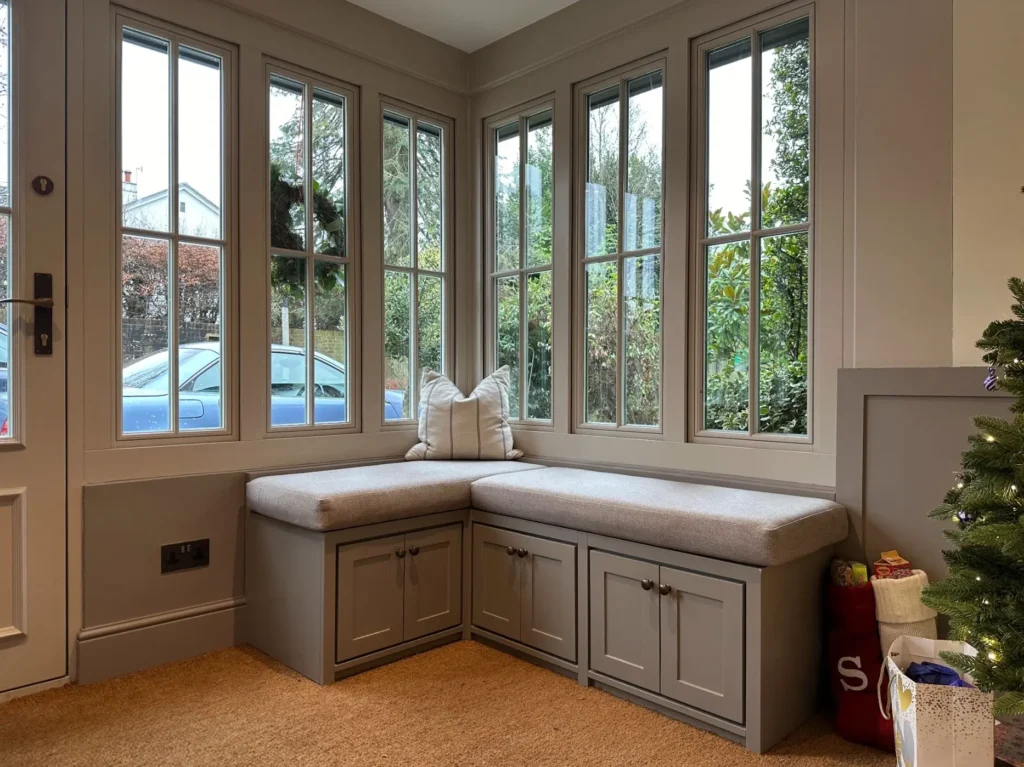
A boot room is not the place for materials that need everyone to be on their best behaviour.
Floors need to deal with outdoor footwear. Cabinetry may encounter damp coats, muddy hands and bags being put down rather less delicately than their owners might admit.
Practical finishes therefore matter.
Painted boot room cabinets should have a durable finish that can cope with regular cleaning, while handles and hardware need to withstand frequent use. Natural timber can introduce warmth and character, but the finish should be selected with the demands of the room in mind.
Ventilation is worth considering too, particularly where damp coats and footwear will regularly be stored.
A beautiful finish is still important. It simply needs to remain beautiful after the room has actually been used.
The most effective boot room ideas often come down to very ordinary questions.
These details are easy to overlook when concentrating on cabinetry, but they determine whether the room genuinely keeps clutter under control.
A small drawer near the entrance might become home to keys and sunglasses. A basket could collect gloves and hats. A dedicated cupboard might contain dog towels and walking equipment. A socket inside a cabinet could provide somewhere convenient to charge equipment, where appropriate.
None is particularly dramatic. Collectively, they can make the difference between a room that merely contains storage and one that actually works.
A good boot room does not need to be enormous, and it certainly doesn’t need to remain permanently photo-ready.
It needs to make the messy parts of everyday life easier to manage.
Thoughtful boot room coat storage, properly sized shoe compartments, a practical boot room bench and a mixture of open and concealed storage can give everything somewhere logical to go. Bespoke furniture takes that a stage further by adapting those features to the room and the people using it.
At Tru English Bespoke Joinery, we design and make fitted furniture for homes across Sussex and Surrey, with cabinetry created around individual spaces and requirements. If you are considering a bespoke boot room or fitted storage for an awkward entrance, get in touch with us to discuss your space or call us at 01403 915857.
If you enjoyed this read, you may also like: home decor ideas that actually work in real homes.
A useful boot room will usually include somewhere for shoes, coats and bags, along with a seat for taking footwear on and off. The exact combination should depend on the household. Dog equipment, sports kit, umbrellas and outdoor clothing may all need dedicated storage too.
Use the height of the room as well as the floor area. Tall cabinets, storage beneath a bench and hooks above seating can provide several functions within a relatively small footprint. Bespoke furniture can also make use of narrow walls, corners and alcoves.
Combine accessible open storage with concealed cupboards and drawers. Keep frequently used coats and shoes within easy reach, while seasonal items and less attractive belongings can be stored behind cabinet doors.
A boot room bench provides somewhere comfortable to put on and remove footwear and can create valuable storage underneath. Drawers, cupboards or open shoe compartments can all be incorporated beneath fitted seating.
It depends on how many coats you need to accommodate and how often they are used. Hooks are convenient for everyday jackets, while enclosed cupboards can keep less frequently used coats out of sight. Many rooms benefit from combining both.
The appropriate depth depends on what is being stored. Hanging coats need different dimensions from shoes, bags or small accessories, which is one advantage of made-to-measure cabinetry. The cabinets can be sized around their intended contents and the available room.
Yes. A boot room does not necessarily need to occupy a dedicated room. Fitted storage, a compact bench and coat hooks can create a practical entrance area where space permits without trying to recreate a full-sized traditional boot room.
Hard-wearing, easy-to-clean flooring is generally the most practical choice because the room will regularly encounter outdoor footwear, moisture and dirt. The appropriate material will depend on the property, desired appearance and conditions within the room.
A bespoke approach can be particularly useful when the room has awkward dimensions or you have specific storage requirements. Fitted furniture can be designed around walls, alcoves and ceiling heights while giving shoes, coats, bags and other belongings appropriately sized storage.
Yes. A combined utility and boot room can work particularly well because both spaces need practical storage and durable finishes. Careful planning can separate laundry and household functions from coats, footwear and outdoor equipment so the room doesn’t become overloaded.