
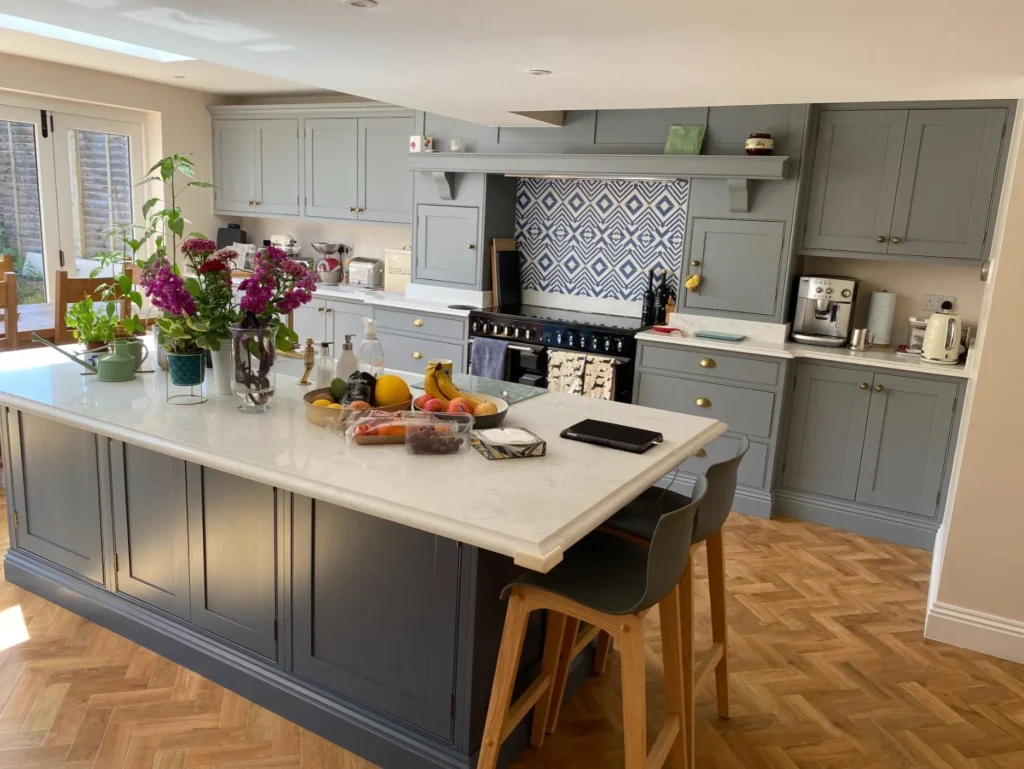
‘How much does a bespoke kitchen cost’ is usually one of the first questions people ask once a new kitchen moves from the ideas stage towards becoming an actual project. It is also a question without a particularly helpful one-size-fits-all answer.
A bespoke kitchen is designed around an individual room and specification, so its price changes with it. Size matters, but so do the cabinetry, materials, storage, worktops, appliances, installation and the amount of work required before the first cupboard is even fitted.
How much does a bespoke kitchen cost? The answer depends on what is actually being designed and included. Room size, the number and complexity of cabinets, materials, internal storage, worktops, appliances and installation can all substantially affect the final price. Rather than relying on an average figure, a detailed quotation based on your room and requirements gives a much more useful indication of what your kitchen will cost.
There are plenty of average kitchen prices online, but they need a little context.
Research from Which? shows that kitchen renovation costs vary considerably according to size and quality. It also specifically avoids giving a standard price for bespoke cabinetry because there is simply too much variation.
That makes sense when you consider what “bespoke” actually means.
Two kitchens occupying similarly sized rooms could have completely different specifications. One might use relatively simple cabinetry around the perimeter of the room. Another could include a large island, full-height cupboards, a pantry, specialist internal storage, natural timber details and premium appliances.
Their square footage might be similar. Their bespoke kitchen cost probably won’t be.
So rather than asking only how big is the kitchen?, it is more useful to look at what goes into the price.
A larger kitchen will often require more cabinetry and worktop, but size alone does not dictate cost.
Layout matters too. A straightforward run of cupboards is quite different to cabinetry wrapping around corners, fitting beneath unusual ceiling heights or working with the charming refusal of an older wall to be completely straight.
An island will add further cabinetry and worktop and may also involve services if it contains a sink, hob or appliances.
This is one reason we begin our bespoke handmade kitchens with the room itself rather than trying to impose a predetermined collection of units upon it.
The number of bespoke kitchen cabinets required will naturally influence the overall price, but complexity is equally important.
A simple cupboard and a large pantry with internal drawers, shelving and specialist storage are both technically “one cabinet”. They certainly don’t involve the same amount of work.
Features such as curved cabinetry, glazed cupboards, integrated seating, unusual dimensions and detailed door styles can all increase the manufacturing time involved.
Construction method matters as well. As we discuss in our guide to in-frame kitchens, cabinetry with doors and drawers individually fitted within a face frame requires additional material and precise fitting compared with simpler forms of construction.

Material choice has a significant effect on handmade kitchen cost, particularly when those materials are being used across an entire room.
Painted cabinetry, natural hardwoods, veneers and combinations of different materials all come with different costs and manufacturing requirements. The same applies to the finish itself.
And then there are the worktops.
Laminate, timber, quartz, granite and other surfaces can sit at very different price points. Which?’s 2026 kitchen-cost research similarly identifies cabinetry, appliances, worktops and labour among the significant components of an overall kitchen budget.
The useful question is therefore not necessarily, “What is the most expensive material we can use?”
It is, “Where will spending more make a difference?”
A beautifully chosen material used in the right place can have considerably more impact than specifying the most expensive option everywhere simply because you can.
Open a cupboard door, and the differences between two kitchens can become much more obvious.
A basic shelved cupboard is relatively straightforward. Introduce solid drawers, pull-out storage, bespoke dividers, larder systems and specially designed spaces for particular items, and considerably more goes into making the interior.
This is one of the areas where bespoke kitchen cabinets can earn their keep.
Rather than paying for clever storage because it looked impressive in a showroom, storage can be designed around what you genuinely own. A keen cook may want drawers specifically arranged around pans, utensils and ingredients. Someone else may value a breakfast cupboard that allows the toaster, coffee machine and associated clutter to disappear behind closed doors.
We have explored this in more detail in our guide to organising kitchen cabinet storage.
The goal isn’t to fit the greatest possible number of mechanisms into every cupboard. It’s to spend the storage budget where it makes everyday life easier.
It is very easy to discuss handmade kitchen cost as though cabinetry is the entire kitchen.
Unfortunately for the budget spreadsheet, it isn’t.
Worktops, sinks, taps, ovens, refrigeration, extraction and other appliances can account for a substantial part of a complete project. Which? notes that appliance and worktop choices can materially affect renovation costs, with worktop prices varying considerably by material.
This also explains why headline kitchen prices are sometimes difficult to compare.
Before comparing two quotations, establish exactly what each includes. Does the price cover cabinetry only? Worktops? Appliances? Installation? Removal of the old kitchen?
A cheaper-looking quotation becomes rather less exciting if half the kitchen is still waiting to be added to it.
The cost of fitted kitchen projects also depends on what has to happen between the old kitchen coming out and the new one becoming usable.
Installation itself needs to be budgeted for, but there may also be plumbing, electrical work, flooring, decorating or alterations to the room.
Changing the layout can have a particularly significant effect. Keeping a sink roughly where it already lives is one thing. Moving plumbing, electrics and appliances around the room is another.
Which? Estimates show labour can represent approximately 20–30% of overall kitchen expenditure when the homeowner is not undertaking parts of the installation themselves, while noting that bespoke installation tends to involve greater precision.
In England, simply replacing kitchen units and fittings does not generally require Building Regulations approval, although associated drainage and electrical work may require it. Creating a kitchen in a room that wasn’t previously used as one can introduce further requirements.
That is why the cost of fitted kitchen projects should be considered as a whole rather than looking at the price of the cabinets in isolation.

Start by deciding what matters most.
Perhaps natural timber is non-negotiable, but you are happy to choose more modest appliances. Perhaps cooking is a serious hobby and appliances deserve a larger share of the budget. Or perhaps exceptionally well-planned storage is the reason you are replacing the kitchen in the first place.
A useful early list might separate your requirements into must-haves, would-likes and things you are happy to compromise on.
It is also worth discussing budget early with your kitchen designer. That does not mean every available pound needs to be spent. It gives the designer a realistic framework in which to decide where materials, cabinetry and features will have the greatest impact.
Are bespoke kitchens worth it? That depends on what you want bespoke design to achieve.
If your only requirement is a row of standard-sized cupboards in a straightforward room, you may not need every element to be individually designed and made.
Bespoke becomes particularly valuable when the room itself is unusual, when you have specific storage requirements or when the proportions, materials and detailing of the cabinetry matter to you.
It also provides freedom. Instead of choosing the closest available cabinet size, bespoke kitchen cabinets can be designed for the available space. Rather than choosing storage from a predetermined list, interiors can be planned around what needs to go inside them.
That is the difference worth considering when asking are bespoke kitchens worth it: not simply whether they cost more, but what you receive in return for that additional investment.
The most useful answer to how much does a bespoke kitchen cost will always come from discussing the actual room.
At Tru English Bespoke Joinery, we design and make kitchens around individual homes across Sussex and Surrey. The room, cabinetry, materials, storage and details are considered together, allowing the quotation to reflect what is actually being made rather than an arbitrary average kitchen.
If you are planning a new kitchen, get in touch with Tru English Bespoke Joinery to discuss your space and what you would like to achieve.
If you enjoyed this read, you may also like: Pantry Cupboard Ideas for a Cramped Kitchen
There is no standard price because bespoke kitchens are designed around individual rooms and specifications. The size and complexity of the cabinetry, materials, worktops, appliances, internal storage and installation requirements can all affect the final cost.
This varies between companies, which is why quotations should be checked carefully. A quote may include cabinetry, design and installation, while worktops, appliances, building work or other trades may be separate. Ask for a clear breakdown of what is and isn’t included.
Bespoke kitchens involve cabinetry designed and manufactured specifically for an individual project rather than relying entirely on standard unit dimensions. Materials, construction methods, detailed finishes and specialist internal storage can also increase the amount of skilled work involved.
Room size, the amount and complexity of cabinetry, materials and finishes all have a significant effect. Worktops, appliances, specialist storage and the installation requirements of the room can then make a considerable difference to the overall project price.
Not all fitted kitchens are bespoke. A fitted kitchen can use standard-sized cabinets installed to suit the room, whereas a fully bespoke kitchen allows individual cabinets to be designed and made specifically for the space. This additional design and manufacturing work generally comes at a higher cost.
Usually. An island adds cabinetry and worktop and may incorporate drawers, specialist storage, seating or appliances. Adding a sink or hob can also require plumbing, electrical or extraction work depending on the design.
No. Bespoke cabinetry can use different materials depending on the required appearance, construction and budget. Solid timber may be used selectively alongside other high-quality cabinet materials, painted finishes and veneers.
Yes. Establishing priorities early can help concentrate the budget on the things that matter most. Simplifying cabinetry, reconsidering particularly expensive materials or appliances, and avoiding unnecessary changes to plumbing and electrical positions may all help control the overall cost.
They can be particularly useful in smaller or awkward spaces because cabinets can be designed around the available dimensions rather than relying on standard unit sizes. Whether that additional flexibility is worth the cost will depend on the room and what you need the kitchen to achieve.
Yes. A detailed quotation makes it much easier to understand what you are paying for and compare proposals properly. It should make clear what is included in the cabinetry and installation and identify significant elements that will need to be supplied or priced separately.